The Naibbe Cipher
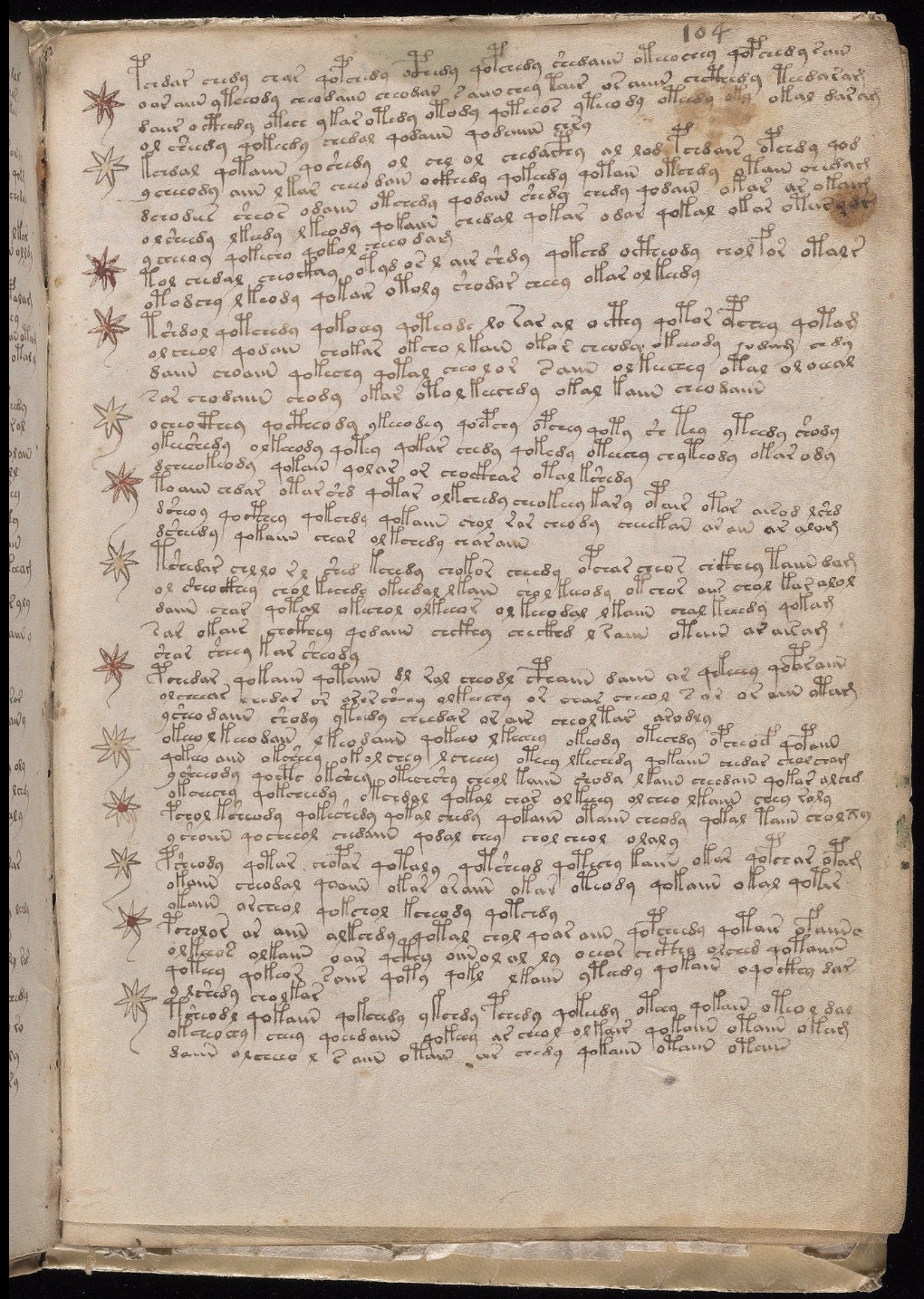
Folio f104r of the Voynich Manuscript (MS 408)
In my spare time, I conduct independent academic research on the Voynich Manuscript, an enigmatic 15th-century manuscript housed at Yale University’s Beinecke Library. Sometimes called “the most mysterious manuscript in the world,” the manuscript contains more than 200 pages’ worth of bizarre-looking text alongside fantastical illustrations. Cryptographers, linguists, and medievalists have tried for more than a century to determine the Voynich Manuscript’s true history, nature, and purpose. But there is still no consensus on what it says—or even if it says anything at all.
In a peer-reviewed academic paper published in the cryptology journal Cryptologia, I describe what I call the Naibbe cipher, a cipher of my own design that can reliably encrypt Latin and Italian text as ciphertext that statistically mimics the Voynich Manuscript, while also being doable by hand with only 15th-century materials. The Naibbe cipher is not a solution to the manuscript in and of itself, but it proves that a meaningful message can be hidden within text that has many of the Voynich Manuscript’s puzzling properties.
Click on the link above or the button below to read the paper, which is open-access. I also gave a talk on my research at Voynich Manuscript Day 2025, a recording of which is available here. In addition, you can read more about the Naibbe cipher and its potential significance in this blog post from University of Cologne researcher Jürgen Hermes. You can also check out media coverage from The Art Newspaper, Live Science, IFLScience, Science & Vie, ActuaLitté, The Independent, Newsweek, and The Debrief.